
Home » flooring-installation » flooring-installation/bamboo-flooring-installation

Bamboo Floors That Are Harder Than Oak and Built for Cameron Park Homes

Bamboo is one of the hardest, most sustainable flooring materials you can put in your home. It grows back in 5 to 7 years, looks like hardwood, and strand-woven bamboo scores over 3,000 on the Janka hardness scale. That is more than twice as hard as red oak.
We install solid, engineered, and strand-woven bamboo flooring for homes and offices across Cameron Park and El Dorado County. We handle acclimation, moisture testing, subfloor prep, and all trim work. Every project starts with a free on-site visit where we measure your rooms, check the subfloor, and walk you through the bamboo options that fit your home.
Bamboo needs careful handling during installation. It reacts to moisture and temperature more than most flooring materials. When it is acclimated, tested, and installed correctly, it stays flat, quiet, and beautiful for 20 to 30 years.

Bamboo Is a Grass, Not a Tree, and That Is What Makes It So Strong

Bamboo flooring is made from the Moso bamboo species (Phyllostachys edulis), a giant grass that grows in managed forests across China and Southeast Asia. Unlike hardwood trees that take 40 to 80 years to mature, Moso bamboo reaches full height in 5 to 7 years. That fast growth cycle makes it one of the most renewable flooring materials available.
The bamboo stalks are split into strips, dried, treated, and pressed into planks. The way those strips are arranged determines the grain pattern, color, and hardness of the finished floor:
We verify every bamboo delivery using a bamboo Janka hardness impact tester before installation begins. This tool drops a steel ball from a fixed height onto a plank sample and measures the depth of the dent. We compare the result against the manufacturer’s stated Janka rating to confirm the bamboo matches the hardness grade that was ordered. This check follows ASTM D1037 Standard Test Methods for Evaluating Properties of Wood-Base Fiber and Particle Panel Materials, which covers the mechanical testing procedures for compressed plant-fiber products like strand-woven bamboo. Bamboo that tests below its rated hardness gets flagged before it goes on the floor, because softer planks dent faster under furniture legs and foot traffic.

The Subfloor Under Your Bamboo Decides Whether It Stays Flat or Starts to Move

Bamboo flooring needs a flat, dry, and structurally sound subfloor. Here is what we check and fix before any bamboo goes down:

Plywood subfloors (raised foundations): We walk the floor and listen for squeaks. We screw down loose panels, replace damaged sections, and check flatness with a straightedge. The subfloor must be flat within 3/16 inch over 10 feet for floating and nail-down bamboo.
Concrete slabs (slab-on-grade): We test the slab moisture using a calcium chloride test or in-situ probe. The moisture vapor emission rate must be below 3 lbs per 1,000 sq ft per 24 hours for most bamboo adhesives. If the slab is too wet, we apply a moisture barrier or vapor retarder before installing.
Crawl spaces: Homes in Shingle Springs, Rescue, and parts of Cameron Park often have raised foundations with crawl spaces. We check the crawl space for standing water, vapor barrier condition, and ventilation. Moisture coming up from the ground can damage bamboo from below even when the top surface looks dry.

What Bamboo Flooring Installation Services We Provide in Cameron Park, CA

Our team delivers reliable flooring installation services designed to meet manufacturer standards, local environmental conditions, and long-term performance expectations for Cameron Park homes.

Solid, Engineered, and Strand-Woven Are Three Different Products for Three Different Situations

Solid bamboo is a single layer of pressed bamboo strips. It comes in horizontal or vertical grain. It can be sanded and refinished 2 to 3 times over its life. Solid bamboo works best over plywood subfloors in rooms with stable humidity. It is not recommended over concrete slabs because it expands and contracts more than engineered products.
Engineered bamboo has a thin bamboo wear layer bonded to a plywood or HDF core. The cross-layered core gives it better dimensional stability than solid bamboo. Engineered bamboo can go over concrete slabs, over radiant heat, and in rooms where humidity changes through the seasons. It is the best choice for most Cameron Park homes because of the area’s hot summers and cool winters.
Strand-woven bamboo is the hardest option. The bamboo fibers are shredded, mixed with resin, and compressed under 4,000+ PSI of pressure. The result is a plank that scores 3,000 to 5,000 on the Janka hardness scale. Strand-woven bamboo handles heavy furniture, pet claws, and high foot traffic better than any other bamboo product. It comes in both solid and engineered versions.

Bamboo Stair Treads and Risers Need Exact Cuts and Secure Attachment

Stair installation is one of the hardest parts of a bamboo project. Each tread must be cut to fit the exact width and depth of the step. The nosing must overhang the riser by the right amount for safety and code compliance. And every piece must be glued and secured so it does not shift under foot traffic.
We install bamboo stair treads using construction adhesive and mechanical fasteners. We add matching stair nosing with a bullnose or square edge profile. Risers get bamboo face panels cut to fit between the stringers.
For homes with open stairs or visible stringers, we finish the exposed edges with matching bamboo trim. The result is a clean, continuous look from the main floor to the second story.

What Makes Our Bamboo Installations Different

We Acclimate Every Job

We never skip acclimation. Every bamboo delivery sits in your home for 3 to 7 days while we monitor moisture readings. That patience is what prevents cupping, gapping, and callbacks.

We Match the Method to the Subfloor

Concrete slabs get floating or glue-down. Plywood subfloors get nail-down or floating. We test moisture, check flatness, and pick the method that gives you the best long-term result.

We Know Cameron Park's Climate

Hot summers that drop indoor humidity to 15%. Wet winters that push it above 50%. Older homes with crawl spaces that trap moisture below the subfloor. We have worked in these homes for over 20 years and know what to expect.

We Handle Everything

Removal, disposal, subfloor repair, acclimation, installation, trim, transitions, stairs, and cleanup. One crew. One timeline. One price.

We Verify Before We Install

We test the bamboo hardness, check the moisture content, and measure the subfloor flatness before a single plank goes down. That verification step is what separates a professional installation from a DIY attempt.

Three Ways to Install Bamboo and How We Choose the Right One for Your Home
The installation method depends on the bamboo product type, the subfloor material, and how the room is used. We offer three methods:
01
Floating (click-lock)
The bamboo planks snap together using a tongue-and-groove edge profile. The floor sits on top of an underlayment pad and is not attached to the subfloor. Floating installation works over concrete, plywood, and existing hard floors. It is the fastest method and allows the floor to expand and contract freely. We check every click-lock connection using a bamboo tongue-and-groove fit gauge during installation. This tool slides into the joint between two planks and measures the gap and offset in thousandths of an inch. We verify that each connection falls within the manufacturer's tolerance (usually 0.005 inches or less). This quality check follows NWFA (National Wood Flooring Association) Installation Guidelines Section 5.4 Floating Floor Systems, which requires that all click-lock joints meet the manufacturer's published fit specifications to maintain warranty coverage. In Cameron Park homes with concrete slabs, floating installation is the most common method because it avoids adhesive and allows the floor to move with seasonal humidity changes.
02
Glue-down
Each plank is bonded directly to the subfloor using a full-spread adhesive. Glue-down creates the most solid feel underfoot and reduces noise. It works on concrete slabs and plywood. This method takes longer because the adhesive needs time to cure before you can walk on the floor.
03
Nail-down
Each plank is fastened to a plywood subfloor using a pneumatic flooring nailer. The nails go through the tongue at an angle so they are hidden by the next plank. Nail-down is the traditional method for solid bamboo over wood subfloors. It is not used over concrete.
We match the method to your home during the free on-site visit.

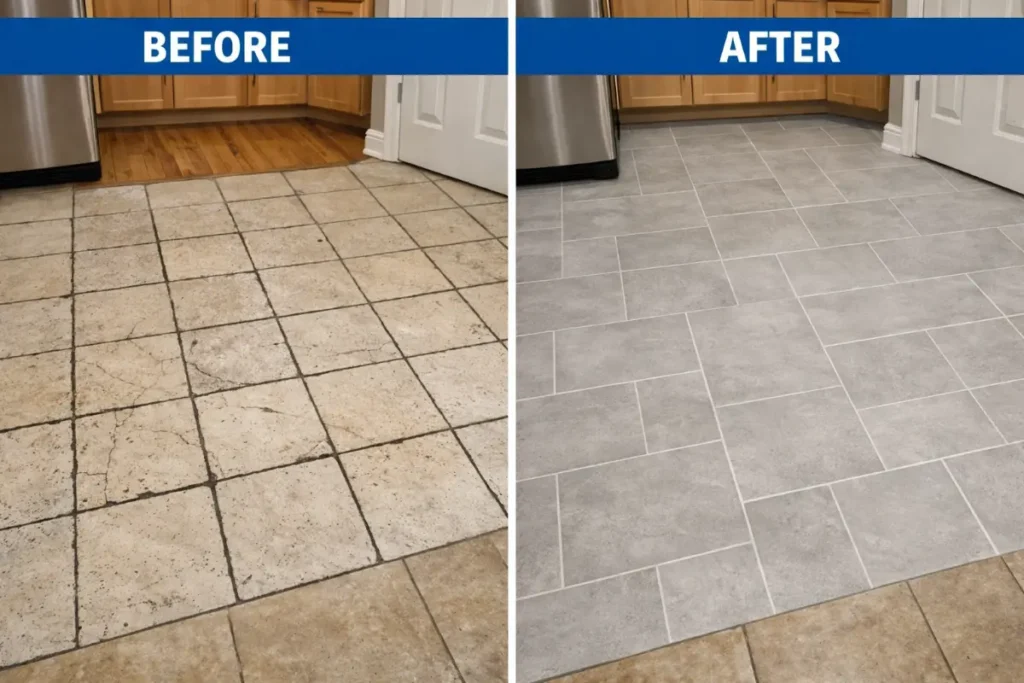
Before and After: Bamboo Flooring Installation Results

Before Installation
  • Uneven floors with squeaks or soft spots
  • Outdated or damaged flooring materials
  • Concerns about moisture damage or movement
  • Poor transitions and unfinished edges
After Installation
  • Stable, quiet bamboo floors with a solid feel
  • Clean transitions and consistent expansion spacing
  • Improved appearance and property value
  • Flooring designed to perform in Cameron Park conditions

Ready for Bamboo Floors That Look Like Hardwood and Last Even Longer?

Whether you want strand-woven bamboo for the family room, engineered bamboo over your concrete slab, or solid bamboo for the bedrooms, we can help. We will test your subfloor, acclimate the material, and install it with the right method for your home.
Call (916) 365-4251 to set up your free bamboo flooring consultation. Or fill out the form below and we will get back to you within one business day.

Bamboo Flooring Installation Across El Dorado County and Sacramento

We install bamboo flooring in:

Each community has different foundation types, humidity patterns, and subfloor conditions. We adjust the bamboo product, installation method, and acclimation period for each home.

Bamboo Flooring Questions Cameron Park Homeowners Ask Us

How much does bamboo flooring cost installed?
The typical range is $5 to $12 per square foot, including materials, labor, and basic removal. Solid bamboo with floating installation is on the lower end. Strand-woven bamboo with glue-down and stair work is on the higher end. We give free on-site estimates.
Strand-woven bamboo scores 3,000 to 5,000 on the Janka hardness scale. Red oak scores 1,380. So yes, strand-woven bamboo is more than twice as hard as the most common hardwood used in American homes.
Yes. Engineered bamboo and strand-woven engineered bamboo both work well over concrete. We test the slab moisture first and use either floating or glue-down installation depending on the product and the room.
Most bamboo products need 3 to 7 days of acclimation inside the home before installation. We open the boxes, spread the planks across the room, and monitor moisture readings until the bamboo reaches equilibrium with the indoor environment.
Strand-woven bamboo is one of the best flooring options for homes with dogs. Its high Janka hardness resists scratches from claws better than oak, maple, or most engineered hardwoods. We recommend strand-woven for any home with large or active dogs.
Solid bamboo can be sanded and refinished 2 to 3 times. Strand-woven bamboo can be refinished 1 to 2 times. Engineered bamboo with a thin wear layer can usually be refinished once. We use a screen-and-recoat process for light refreshes and a full sand-and-finish for deeper restoration.
Yes. Moso bamboo reaches harvest height in 5 to 7 years. Hardwood trees take 40 to 80 years. Bamboo also absorbs more carbon dioxide per acre than most tree species. It is one of the most renewable flooring materials on the market.
Natural bamboo has a light blonde color. Carbonized bamboo is heat-treated to give it a darker amber tone. The carbonizing process softens the bamboo slightly, so carbonized bamboo is about 10% to 15% softer than the natural version of the same product.
Yes. We install bamboo stair treads, risers, and nosing. Each piece is cut to fit the exact dimensions of the step and secured with construction adhesive and mechanical fasteners. We match the stair bamboo to the main floor for a continuous look.
A typical room takes one day. A full home (3 to 4 rooms plus hallways) takes 2 to 4 days, not counting the 3 to 7 day acclimation period. Stair work adds extra time. We give you a full timeline before we start.