
Home » flooring-installation » flooring-installation/tile-flooring-installation

Tile Floors Built to Handle Water, Heat, and Heavy Traffic

Tile is the only floor that works in every wet room of your home. It stands up to water in showers, grease in kitchens, mud in entryways, and heat from radiant systems below. A tile floor that is set on a prepared surface can last 25 to 50 years without replacement.
We install ceramic, porcelain, natural stone, and wood-look tile for homes across Cameron Park, El Dorado Hills, Shingle Springs, Folsom, Placerville, and the greater Sacramento area. We also take care of substrate prep, waterproofing, old tile removal, grout sealing, and all trim work.
Every project starts with a free on-site visit. We check the subfloor, measure moisture, and plan the layout before giving you a price. This step keeps surprises out of the project and gives you a clear picture of what to expect.

What Goes Under the Tile Matters More Than the Tile Itself

A tile floor is only as strong as the surface beneath it. If the substrate flexes, holds moisture, or has uneven spots, the tile will crack at the grout joints or come loose from the mortar. Fixing that after installation means tearing everything out and starting from scratch.

Here is what we check and fix before any tile goes down:

For bathrooms, showers, and wet areas, we install a waterproofing layer between the substrate and the tile. We set a Schluter DITRA uncoupling membrane into a modified thinset using a flat edge trowel, then press the surface with a weighted roller to push the fleece backing into the mortar. The DITRA membrane does three things. First, it blocks water from reaching the subfloor. Second, it absorbs movement between the substrate and the tile so cracks do not transfer through. Third, it lets moisture vapor escape upward through built in channels. This method follows El Dorado County Building Division amendments to the California Residential Code Section R702.4. That code section requires waterproofing in all tile shower compartments, tub surrounds, and wet area floors to prevent structural moisture damage in homes.
Skipping waterproofing in a shower or bathroom is the most common cause of mold, rot, and damage behind tile walls. We never skip it.

our Tile flooring installation service include

Porcelain Tile for Kitchens, Hallways, and Rooms That Get Used the Most

Porcelain is the hardest and most water resistant tile we install. It stands up to daily spills, pet scratches, heavy foot traffic, and temperature changes without showing wear. For most Cameron Park homes, porcelain is the best all around choice for floors.

We install porcelain tile in these areas:

Rectified porcelain allows grout lines as narrow as 1/16 inch. This gives the floor a clean, modern look. We suggest this option for open layouts where you want the tile to feel like one continuous surface.

Marble, Granite, and Slate for Rooms That Deserve Real Stone

Natural stone tile is cut from quarried rock. Every piece carries a different grain, vein pattern, and shade. That is what makes it look unlike any factory made product.

We install:

Stone tile needs sealing after installation and resealing every one to three years. We apply a penetrating sealer that soaks into the pores without changing how the surface looks. This protects against water stains, oil marks, and discoloration over time.

Get the Look of Hardwood Floors Without the Water Damage

Wood look porcelain tile copies the grain, color, and texture of real hardwood planks. It comes in long, narrow sizes (6×36, 8×48) and goes down in staggered patterns just like wood flooring. The difference is that it handles water, scratches, and pet claws without any damage.

This option works well for:

We install rectified wood look tile with narrow grout lines and matching grout to reduce the “tile grid” look. The result looks like a real hardwood floor but performs like porcelain in every way.

Tile for Shower Floors, Walls, Tub Surrounds, and Built In Niches

Bathrooms are the most technical tile project in any home. Standing water, steam, temperature shifts, and daily use all put stress on the tile, grout, and substrate. Getting the layers right means the tile stays solid for decades.

We handle:

Every shower we tile gets a tested waterproofing system underneath. The membrane covers the walls, floor, curb, and any niches. We test the liner before tiling to confirm zero leaks.

Warm Tile Floors for Cold Cameron Park Mornings

Tile conducts heat better than any other flooring material. That makes it the best match for radiant floor heating. An electric heating mat sits between the substrate and the tile. It warms the surface evenly and keeps your feet comfortable when the temperature drops.

We install heated tile in:

The heating mat connects to a wall thermostat with a floor sensor. You set the temperature and schedule, and the system runs on its own. It adds about $8 to $15 per square foot to the total tile installation cost depending on the mat brand and room size.

Backsplash, Accent Walls, and Detail Tile That Complete the Room

Tile is not just for floors. We also install decorative tile on kitchen backsplashes, bathroom accent walls, fireplace surrounds, and bar fronts.

Popular choices include:

We handle layout design, edge finishing, and fitting the tile around countertops and cabinets. Every backsplash comes with sealed grout and clean caulk lines where the tile meets the counter surface.

What Sets Our Tile Work Apart From Other Installers

We Prep the Substrate First

We never set tile on a surface that is not ready. Every job starts with a subfloor check, leveling, and backer board or membrane installation. That prep work keeps the tile from cracking years down the road.

We Match the Tile to the Room

Porcelain goes in kitchens. Non slip mosaic goes on shower floors. Marble goes in entryways. We pick the right tile and the right method for each space instead of using the same approach everywhere.

We Have Worked in Foothills Homes for Over 20 Years

Cameron Park homes deal with hot, dry summers and cold, wet winters. Concrete slabs hold moisture. Raised foundations shift. We know these conditions and build every tile job to handle them.

We Waterproof Every Wet Area

Every shower, bathroom floor, and tub surround gets a tested waterproofing system. No shortcuts. No exceptions.

We Include Grout Sealing in the Price

Our quotes cover materials, labor, substrate prep, grout, grout sealing, and cleanup. Sealing is not an extra charge. It is part of the job.

From Bare Subfloor to Finished Tile in Five Steps

Tile installation follows a set order. Each step builds on the one before it. Skipping any step creates problems that show up weeks or months later as cracked tiles, loose corners, or grout that falls apart.
01
Inspection and measurement
We check the subfloor type, whether it is concrete or plywood. We also measure moisture content and test how flat the surface is. Next, we count rooms, doorways, and obstacles to plan the layout and figure out how much material you need.
02
Substrate preparation
On plywood subfloors, we screw and mortar cement backer board to the surface. On concrete slabs, we grind down high spots and fill low areas with a leveling compound. In wet zones like showers and bathroom floors, we apply a waterproofing membrane over the substrate.
03
Layout and dry fit
We snap chalk lines to set the starting point and tile pattern. Then we lay the first few rows without mortar to confirm spacing, check how the tiles line up with walls and doorways, and plan where the cuts will fall. This step stops thin slivers of tile from ending up along visible edges.
04
Thinset and tile setting
We spread modified thinset mortar with a notched trowel and press each tile into the bed. For tiles 12x24 and larger, we also apply thinset to the back of the tile to make sure the bond covers the full surface. We use a tile leveling clip and wedge system to lock side by side tiles at the exact same height. The clips slide under the tile edges and the wedges push both tiles flat against each other. This stops lippage, which is when one tile edge sits higher than its neighbor. This method follows ANSI A108.02, Section 4.3.8, which sets the maximum height difference allowed between tiles based on grout joint width and tile size.
04
Grouting and sealing
After the thinset cures for 24 hours, we pack the joints with grout, smooth the surface, and wipe the excess clean. Once the grout sets, we apply a sealer that blocks moisture and stains from soaking into the grout lines. For natural stone, we seal both the tile face and the grout.

Professional Laminate Floor Installation – Before & After Results
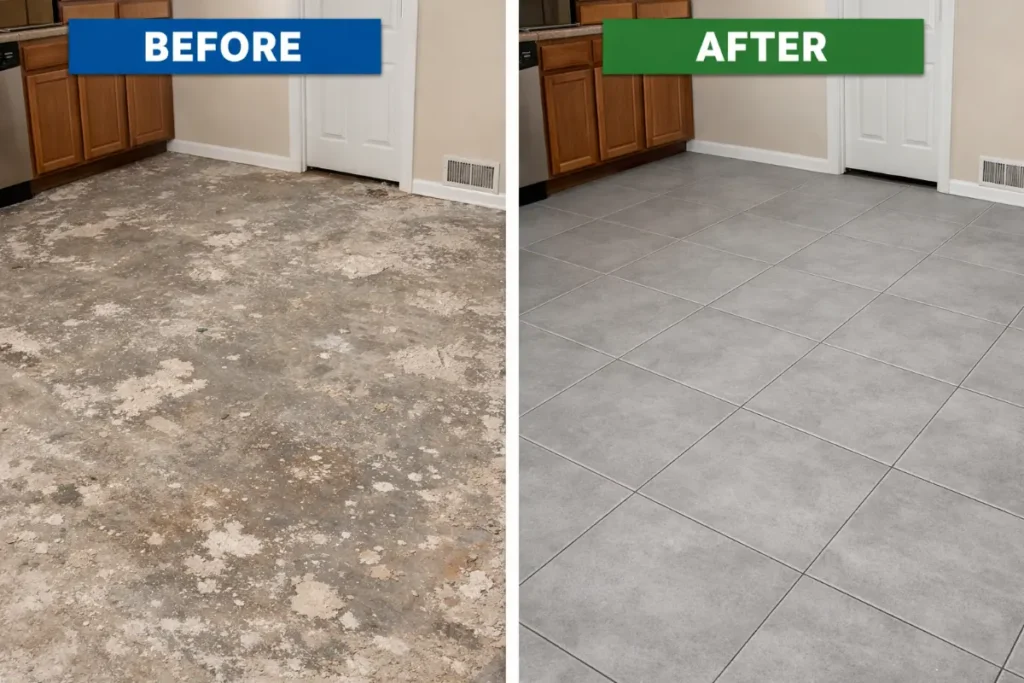
This before-and-after image showcases a professional tile flooring installation completed in the same space. The before section highlights an uneven, worn subfloor with visible residue and surface imperfections. In the after section, the area is transformed with clean, evenly installed gray ceramic tiles, creating a smooth, modern, and durable finish that enhances the overall appearance of the room while maintaining a natural, realistic outcome.

Ready to Put Real Tile in Your Kitchen, Bathroom, or Entryway?

Whether you need porcelain in the kitchen, marble in the foyer, mosaic in the shower, or heated tile in the master bathroom, we can help. We will check your subfloor, walk you through the options, and give you a straight price with no hidden fees.
Call (916) 365-4251 to set up your free tile inspection. Or fill out the form below and we will get back to you within one business day.

Tile Floors for Homes Across the Sacramento Foothills

We install tile flooring in:

Tile Flooring Questions Cameron Park Homeowners Ask Us

How long does tile flooring installation take?
A single room usually takes two to four days. A full kitchen or bathroom with substrate prep, waterproofing, and grout curing takes four to seven days. We give you a timeline before we start so you can plan around the work.
Both come from clay. Porcelain is fired at a higher temperature, which makes it denser and harder. It soaks up less than 0.5% water, so it works better in wet rooms. Ceramic is lighter, easier to cut, and costs less. It works well for walls, backsplashes, and dry floors.
Sometimes, yes. If the old tile is flat, firmly stuck down, and free of cracks, we can tile over it with a bonding agent. If the old tile is loose, hollow sounding, or uneven, it needs to come up first. We check during the free inspection.
Over plywood subfloors, yes. Cement board gives the thinset and tile a rigid, moisture resistant surface to bond to. Over concrete slabs, it is usually not needed. We may apply a leveling compound or waterproofing membrane instead depending on the slab condition.
The typical range is $8 to $20 per square foot installed. The final number depends on the tile type, substrate condition, and how complex the room is. Natural stone and heated floors cost more. We give free on-site estimates. You can also try our tile cost calculator for a quick range.
Yes. We install electric radiant heating mats under porcelain and ceramic tile in bathrooms, kitchens, basements, and spa rooms. The system connects to a wall thermostat with a floor sensor. This adds about $8 to $15 per square foot to the total cost.
Porcelain tile for the walls and large flat surfaces. Small mosaic tile for the shower floor because it follows the slope to the drain better than large tiles. Every shower we tile gets a full waterproofing membrane underneath.
Grout needs 24 to 72 hours before the floor can handle normal foot traffic. Showers need a full 72 hours before any water touches the surface. We seal the grout after it cures to protect it from stains and moisture.
Yes, compared to porcelain or ceramic. Stone needs sealing after installation and resealing every one to three years. Acidic liquids like wine, lemon juice, or vinegar can leave marks if spills sit too long. We apply a penetrating sealer that protects the stone without changing how it looks.
Yes. We hold a California CSLB C-15 Flooring and Floor Covering specialty license. We carry full general liability and workers compensation insurance. You can verify our license on the CSLB website.