
Cork Floors That Stay Quiet, Warm, and Comfortable for Decades
- C-15 Licensed
- Fully Insured
- 20+ Years Experience
- Locally Owned

Cork Comes From Tree Bark, Not Timber, and That Changes Everything About How It Feels
- Sound absorption): Cork soaks up footfall noise instead of bouncing it back. It has a Noise Reduction Coefficient (NRC) of 0.15 to 0.30, depending on thickness.
- Thermal insulation: The trapped air in cork cells acts as a natural insulator. Cork has an R-value of approximately 1.125 per inch, which means it stays warm underfoot even on cold mornings.
- Cushion and resilience: Cork compresses under pressure and springs back to its original shape. That cushion reduces leg fatigue for people who stand for long periods.

Cork Absorbs Sound, Holds Warmth, and Cushions Your Feet All at Once
- Sound absorption: Cork's NRC (Noise Reduction Coefficient) ranges from 0.15 to 0.30. That means cork absorbs 15% to 30% of the sound energy that hits it. For comparison, hardwood absorbs about 5% to 10%. Cork also has an IIC (Impact Insulation Class) rating of 50 to 70 when installed with underlayment. An IIC of 50 or higher meets the minimum building code for multi-story residential construction, which makes cork a strong choice for second-floor bedrooms and home offices.
- Thermal insulation: Cork's trapped air cells give it an R-value of about 1.125 per inch. A 12 mm floating cork plank has an R-value of roughly 0.53. That is enough to feel noticeably warmer than tile, vinyl, or laminate on a cold morning.
- Cushion and joint relief: Cork compresses under body weight and springs back. That resilience reduces stress on knees, hips, and lower backs. Families with young children appreciate that cork is softer to fall on than hardwood or tile.
What Cork Flooring Installation Services We Provide in Cameron Park, CA
How We Install Glue-Down Cork Tiles From the Subfloor Up
- Subfloor prep: We check the subfloor for flatness, moisture, and structural soundness. The surface must be flat within 3/16 inch over 10 feet. We patch low spots, grind high spots, and repair any damaged sections.
- Layout: We snap chalk lines and dry-fit the tiles to plan the pattern. We center the layout so that cut tiles at the walls are equal on both sides. We leave a 1/4 inch expansion gap around the perimeter.
- Adhesive application: We spread the adhesive onto the subfloor using a fine-tooth V-notch cork adhesive trowel with 1/16 x 1/16 x 1/16 inch V-shaped notches. This trowel creates thin, uniform ridges that control exactly how much adhesive contacts the back of the cork tile. Too much adhesive causes ooze-up between tiles. Too little causes hollow spots and edge lifting. The fine V-notch pattern follows RFCI (Resilient Floor Covering Institute) Recommended Work Practices Section 6.2 Adhesive Application for Natural Cork Tile, which specifies trowel notch dimensions and spread rates for direct-bond cork installation. We let the adhesive become tacky (open time varies by product and room temperature) before placing the tiles.
- Tile placement: We press each tile into the adhesive and roll the surface with a weighted floor roller to ensure full contact. We work in small sections and check each tile for alignment and spacing.
- Sealing: After the adhesive cures (24 to 48 hours), we apply polyurethane sealer. More on this in the sealing section below.
Floating Cork Planks Click Together and Sit on Top of the Subfloor
- Underlayment: We roll out a foam or cork underlayment over the subfloor. Over concrete slabs, we add a polyethylene vapor barrier beneath the underlayment to block moisture.
- First row: We start along the longest, straightest wall. We cut the tongue off the first row and leave a 1/4 inch gap between the planks and the wall for expansion.
- Click-lock assembly: We angle each plank into the previous row's groove and press down until the joint clicks. We stagger end joints by at least 6 inches between rows. We tap planks tight with a tapping block (never a hammer directly on the cork).
- Trim and transitions: We install baseboards, quarter-round, and transition strips to cover the expansion gaps. We cut transitions for doorways between cork and other flooring types.
What Sets Our Cork Installations Apart From Other Flooring Contractors

We Know Cork Inside and Out
Cork is not laminated. It is not vinyl. It has its own adhesive requirements, sealing needs, and moisture tolerances. We have installed glue-down cork tiles and floating cork planks in homes across Cameron Park for over 20 years.
We Test Before We Install
We check the subfloor flatness, measure the slab moisture, verify the cork cell recovery, and confirm the acoustic rating before a single tile goes down. That testing is what prevents callbacks.
We Seal It Right
Unfinished cork needs 3 coats of water-based polyurethane, applied in thin, even layers with proper dry time between each coat. We do not rush the sealing process. A properly sealed cork floor resists stains, spills, and foot traffic for years.
We Handle Everything
Removal, disposal, subfloor repair, moisture testing, installation, sealing, trim, transitions, and cleanup. One crew. One timeline. One price.
We Adjust for Cameron Park's Climate
Hot summers that push indoor humidity below 20%. Rainy winters that spike it above 50%. Older homes with crawl spaces that trap moisture underneath. We account for all of it before we choose the cork product and installation method.
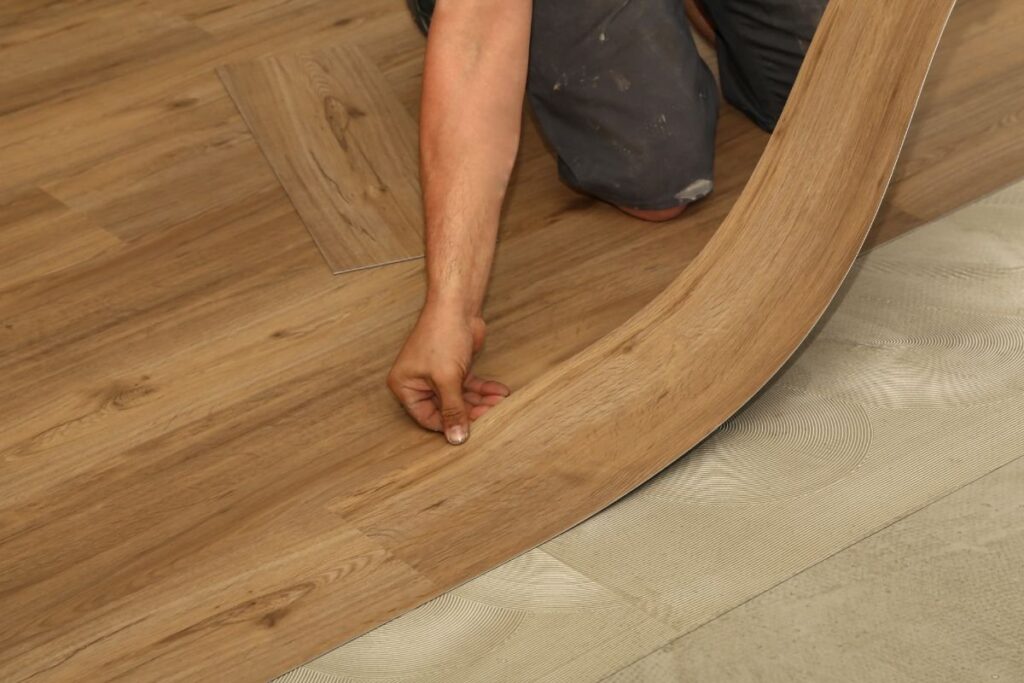
The Subfloor Under Your Cork Must Be Flat, Dry, and Solid Before Anything Goes Down
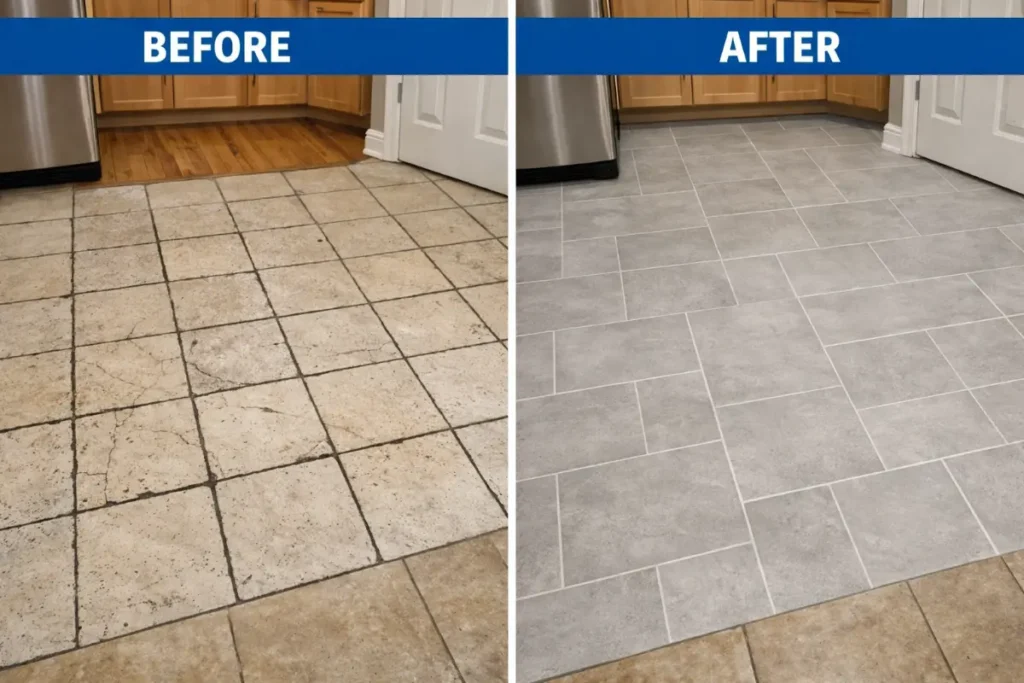
Before and After: What Proper Cork Installation Changes
- Cold, loud floors that amplify foot traffic
- Uneven surfaces or soft spots underfoot
- Concerns about moisture damage or movement
- Poor transitions that chip or wear quickly
- Warmer, quieter rooms with natural comfort
- Smooth, level floors that feel solid underfoot
- Moisture-aware installation built for local conditions
- Clean transitions and finished edges that last
Ready for a Floor That Feels Warm, Sounds Quiet, and Lasts for Decades?
Cork Flooring Installation Across El Dorado County and Sacramento
We install cork flooring in:
- Cameron Park
- El Dorado Hills (Serrano, Waterford, Stonegate)
- Shingle Springs
- Rescue
- Placerville
- Diamond Springs
- Folsom
- Rancho Cordova